A–Z of Different Types of Buttons Used in Garments | Complete Fashion Guide

Introduction: Why Buttons Matter in Fashion & Tailoring
Although they may appear to be tiny accessories however, in reality they’re important design and practical components on clothing. A properly-chosen button can improve the overall style of a suit, shirt or coat garment, whereas a cheap button could diminish the perceived value of the best fabric.
In the field of tailoring and manufacturing garments The buttons impact:
-
Durability
-
Comfort
-
Wear-ability
-
Perception of luxury
-
Quality of the brand
The All-Z Guide provides the majority of button in modern and traditional clothes to help tailors, designers and fashion labels select the appropriate buttons for the appropriate fabrics.
A-Z of Different Types of Buttons
A – Acrylic Buttons
Acrylic buttons are light and shiny, giving the appearance of resin or glass at an affordable price.
Common Uses
-
T-shirts for casual wear
-
Dresses
-
Kidswear
Key Features
-
Affordable
-
Colorfast
-
Scratch-resistant
B – Bone Buttons
Bone buttons provide an organic and classic look.
Common Uses
-
Wearing ethnic clothing
-
Designer jackets
-
Hand-crafted clothes
Key Features
-
Organic texture
-
The appeal of the past
-
Premium look
C – Coconut Shell Buttons
Made of real coconut shells These buttons are sustainable and elegant.
Common Uses
-
Linen shirts
-
Cotton kurtas
-
Summer dress
Key Features
-
Sustainable
-
Lightweight
-
Earthy end
D – Decorative Buttons
The purpose of these buttons is to improve the aesthetics.
Common Uses
-
Coats
-
Fashion for women
-
Designer garments
Key Features
-
Ornamental
-
Many forms and finishes
-
Style-focused
E – Enamel Buttons
Metal buttons that are enameled are covered with enamel colors.
Common Uses
-
Blazers
-
Uniforms
-
Premium jackets
Key Features
-
High durability
-
Elegant shine
-
Luxurious finish
F – Flat Buttons
Flat buttons are the most frequently used buttons on clothing.
Common Uses
-
Shirts
-
Trousers
-
Kurtas
Key Features
-
Sew-through holes
-
Simple to replace
-
Versatile
G – Glass Buttons
Glass buttons are beautiful and reflective.
Common Uses
-
Bridal wear
-
Fashion-forward clothing
-
Costumes for the holidays
Key Features
-
Shiny appearance
-
Premium feel
-
Value of decoration
H – Horn Buttons
Horn buttons can be a timeless option for high-end tailoring.
Common Uses
-
Suits
-
Blazers
-
Overcoats
Key Features
-
Natural grain
-
Durable and sturdy
-
Each button is distinctive
I – Invisible Buttons
Invisible buttons are concealed beneath the layers of fabric.
Common Uses
-
Formal shirt
-
Dresses
-
Minimalist style
Key Features
-
An elegant appearance
-
Subtle fastening
-
Professional finish
J – Jeans Buttons
Specially designed metal buttons that are made for denim clothing.
Common Uses
-
Jeans
-
Denim jackets
-
Heavy-duty pants
Key Features
-
Rivet-backed
-
Extremely robust
-
Industrial strength
K – Knot Buttons
Fabric buttons created using knotting techniques.
Common Uses
-
Traditional dress
-
Chinese and ethnic clothing
Key Features
-
Looks handcrafted
-
Soft texture
-
Cultural sophistication
L – Leather Buttons
Leather buttons can be made of leather or covered with leather.
Common Uses
-
Jackets
-
Winter coats
-
Premium outerwear
Key Features
-
Rugged appeal
-
Premium texture
-
Strong grip
M – Metal Buttons
Metal buttons represent the strength and elegance.
Common Uses
-
Blazers
-
Military-style jackets
-
Uniforms
Key Features
-
Alloys, steel, and brass options
-
Long-lasting
-
High impact on the visual
N – Nylon Buttons
Nylon buttons are extremely light and water-resistant.
Common Uses
-
Mass-market garments
-
Sportswear
Key Features
-
Low cost
-
Wash-resistant
-
Flexible
O – Overcoat Buttons
They are thicker and larger buttons.
Common Uses
-
Wool coats
-
Heavy jackets
Key Features
-
Strong hold
-
Often shank-style
-
Made for heavy fabrics
P – Pearl Buttons
Pearl buttons are elegant and softness.
Common Uses
-
Women’s clothing
-
Bridal outfits
-
T-shirts of the highest quality
Key Features
-
Shiny surface
-
Elegant style
-
Charming and decorative
Q – Quilted Buttons
It is designed specifically for quilted clothing.
Common Uses
-
Jackets with quilted linings
-
Winter attire
Key Features
-
Fabric-covered
-
Matches garment texture
-
Uniform finish
R – Resin Buttons
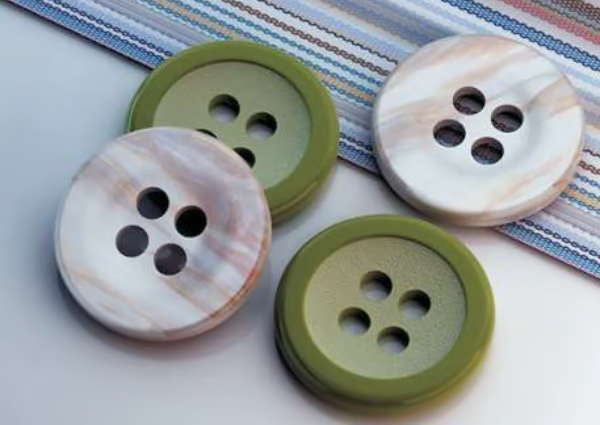
Resin buttons are very versatile.
Common Uses
-
Shirts
-
Dresses
-
Jackets
Key Features
-
The ability to imitate horn, marble or wood
-
Durable
-
Stylish
S – Shank Buttons
Shank buttons feature loops rather than holes.
Common Uses
-
Coats
-
Blazers
-
Sherwanis
Key Features
-
Ideal for fabrics that are thick
-
Better drape
-
Premium fastening
T – Toggle Buttons
The long, cylindrical buttons are commonly found on coats.
Common Uses
-
Duffle coats
-
Winter jackets
Key Features
-
Functional and beautiful
-
Simple to secure
-
Bold look
U – Utility Buttons
Created for functionality, not style.
Common Uses
-
Workwear
-
Industrial uniforms
Key Features
-
High durability
-
Simple design
-
Long-term longevity
V – Velvet Buttons
Velvet-covered buttons are extravagant.
Common Uses
-
Sherwanis
-
Tuxedos
-
Wedding dress
Key Features
-
Soft texture
-
Rich appearance
-
High-end finish
W – Wooden Buttons
The natural wood buttons are environmentally friendly.
Common Uses
-
Clothing of ethnic origin
-
Casual wear
-
Sustainable collections
Key Features
-
Lightweight
-
Natural grain
-
A warm and inviting aesthetic
X – X-Stitched Buttons
Buttons are stitched in are stitched using “X” pattern.
Common Uses
-
Shirts
-
Casual clothing
Key Features
-
Stitching with decorative stitching
-
Strong hold
-
Interest in the visual
Y – Yarn Buttons
Buttons created by making a ring by wrapping yarn around the base.
Common Uses
-
Handmade garments
-
Artisanal style
Key Features
-
Lightweight
-
Soft
-
Craft-focused
Z – Zipper-Support Buttons
Buttons that are attached to zippers provide additional security.
Common Uses
-
Jackets
-
Sportswear
-
Outerwear
Key Features
-
Functional reinforcement
-
Extra fastening
-
Practical design
How to Choose the Right Button for Your Garment
-
Match button weights and fabric-weight
-
You must ensure that the colors are in harmony and the contrast
-
Take into consideration cleaning and maintenance
-
Make sure you choose a durable option for your everyday-wear clothes
-
Make use of premium buttons to create high-end fabrics
Conclusion
Buttons are buttons are a small element that has an enormous impact. From formal suits to casual shirt, the right button improves the appearance and the performance of the garment. Understanding the various types of buttons helps tailors, fashion labels and designers design garments that are more attractive last longer, are more durable, and sell faster.