Difference Between Madhubani, Warli, and Phulkari Prints: India’s Iconic Folk Art

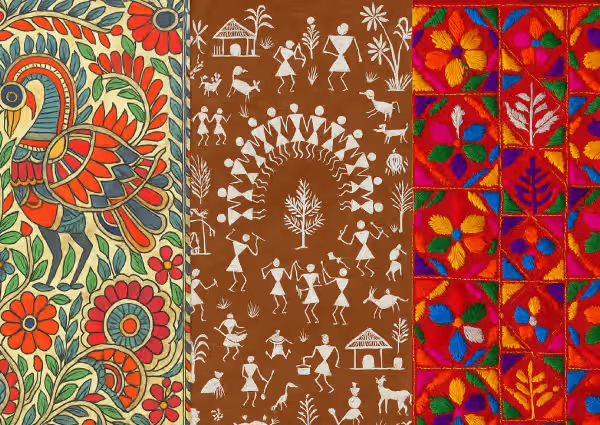
India is more than a nation, but an entire canvas that is full of pattern, color and a story. Every region paints its own culture on fabric using threads, dyes and patterns that are more powerful than words.
In all of them, Madhubani, Warli among them, Madhubani, Warli and Phulkari Three of the most cherished traditional textiles.
While each tells the story of its people’s faith and the landscape, they differ in their technique as well as color palette and the significance of their culture.
Let’s get into the meaning behind these prints and find out the factors that make each one distinctive and eternal.
1. Introduction to India’s Folk Art in Fabrics
Before the advent of digital prints and machine-printed patterns became popular, India’s artisans employed the natural hues, handcrafted brushes and acoustic stitches to convey emotions and life.
These art forms were not “decorations” They were symbols of identity, blessings as well as ceremonies.
Each print, whether it’s Madhubani’s lively storytelling, Warli’s simple designs of the tribal, or Phulkari’s embroidering gardens — represents the world’s perspective in a unique way.
Brown Solid Printed Cotton Canvas Fabric
Original price was: ₹599.₹329Current price is: ₹329.Per Meter
Navy Blue Solid Canvas Fabric
Original price was: ₹499.₹299Current price is: ₹299.Per Meter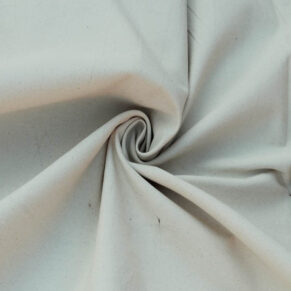
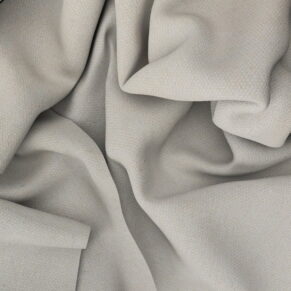
Natural Cotton Canvas Fabric
Original price was: ₹439.₹259Current price is: ₹259.Per Meter
Cotton Black Color Canvas Fabric
Original price was: ₹449.₹299Current price is: ₹299.Per Meter2. What Is Madhubani Art?
Origin and History
Madhubani artwork, often referred to in the form of Mithila painting was developed within Bihar in the Mithila area of Bihar around 2500 years ago.
Legend says it was born with the time that King Janaka (father of goddess Sita) hired local artists to create a wedding portrait for his daughter to Lord Rama.
Traditionally women painted the walls of villages and courtyards with natural dyes in order to mark marriages, festivals and harvests.
Technique and Style
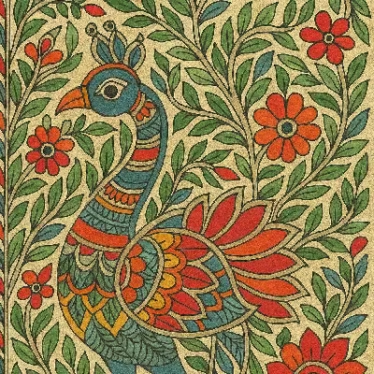
Madhubani is well-known for Madhubani is famous for its intricate and symmetrical designs and the bold utilization of colors.
Originally made using bamboo pen, twigs, as well as natural dyes but the art has since evolved to canvas, paper and fabrics.
Motifs and Symbols
Common themes are:
-
Natural: trees, flowers and fish, and the sun
-
Deities: Krishna, Shiva, Durga, Lakshmi
-
Geometry Triangles, circles and borders encasing every story
Every painting has a border by repeated patterns. There’s no blank space — which is the hallmark of the Madhubani style.
Colors Used
Traditionally, they were made using naturally dyes made from indigo, turmeric as well as sandalwood.
Modern versions make use of screen-printing techniques or acrylics on silk and cotton.
Fabrics and Modern Use
Prints inspired by Madhubani are available today:
-
Sarees and dupattas
-
Stoles and the kurtas
-
Accessories and decor for the home
Popular Madhubani Fabrics: Cotton, Silk, Tussar Silk, and Handloom blends.
3. What Is Warli Art?
Origin and History
Warli art is among the country’s longest-running tribal arts which is that is practiced by members of the Warli tribe from Maharashtra (near Sahyadri hill).
Unlike the vibrant Madhubani, Warli is known for its simplicity and symbolic nature..
It was created around the 2500th century BCE in the time when tribespeople utilized wall paintings to document the daily activities of their lives — harvests, celebrations, as well as dances in the community.
Technique and Style
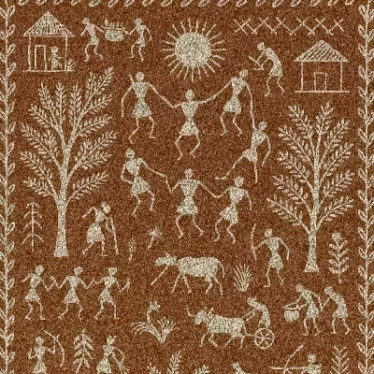
Warli art is usually painted on the walls of mud with pure white rice as paint and a stick of bamboo for the brushes.
The figures are basic geometries such as circles (sun moon, sun) as well as triangles (mountains trees, mountains) as well as quadrilaterals (human homes or gods).
Everything is drawn in a the two-dimensional rhythm without perspective however, it is full of motion.
Motifs and Symbols
-
Human figures forming circle (symbolizing unification and dancing)
-
Trees, animals and buildings in harmony with nature
-
Wedding ceremonies and scenes from harvest
Colors Used
Warli is usually white against earthy brown backgrounds.
Modern textiles are able to interpret this with beige, black or rust hues while maintaining its tribal, raw feel.
Fabrics and Modern Use
Warli patterns can be printed digitally or painted by hand on:
-
Sarees and dupattas
-
Wall hangings, home decor and even the ceiling
Popular Warli Fabrics: Cotton, Khadi, Linen, and Canvas.
4. What Is Phulkari Art?
Origin and History
Phulkari means “flower work” was first discovered in Punjab and dates in the 15th century.
It was embroidered traditionally by women to be a part of wedding trousseaus – an important symbol of love, patience and wealth.
Phulkari was more than just a decorationit had cultural and emotional significance that represented positive qualities and a sense of identity.
Technique and Style
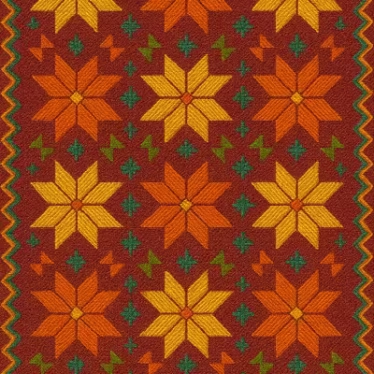
Contrary to Madhubani and Warli and Warli, which can be painted the Phulkari design is embroidering with an darning stitch on the reverse of the fabric.
The beauty lies in the way simple straight stitches make vivid geometric and floral patterns in the back.
Each design is a reflection of the artist’s vision -without tracing, and no drawing or sketching.
Motifs and Symbols
-
Floral designs (roses, marigolds, lotuses)
-
Diamonds as well as geometric patterns
-
Mirrors, peacocks, and wedding-related motifs
Phulkari embroidery wasn’t just for clothes, it was a tale handed through generations by mother and daughter.
Colors Used
The most common base of the traditional base is the coarse, cotton (khaddar) dyed in deep maroon or red and then embellished using silk floss in gold, orange as well as green.
Modern Phulkari has brighter hues such as pink, mustard and turquoise.
Fabrics and Modern Use
The day is now, Phulkari is seen on:
-
Dupattas as well as sarees and salwar suits
-
Handbags, jackets, and cushion covers
-
Bridal attire and festive collections
Popular Phulkari Fabrics: Khaddar, Georgette, Cotton, and Silk Blends.
5. Comparative Table: Madhubani vs Warli vs Phulkari
| Feature | Madhubani | Warli | Phulkari |
|---|---|---|---|
| Origin | Mithila, Bihar | Maharashtra (Warli Tribe) | Punjab |
| Medium | Painting | Painting | Embroidery |
| Technique | Hand-painted with natural dyes | White rice paste dripping on walls of mud | Silk thread hand-embroidered by hand |
| Themes | Mythology, nature, deities | Everyday life and tribal rituals, unity | Wedding motifs, flowers Blessings, flowers |
| Color Palette | Bright, multi-colored | White on a dark background | Vibrant, bold threads |
| Base Material | Cotton, silk, paper | Mud wall, khadi linen | Khaddar or cotton |
| Symbolism | Cultural and spiritual stories | Simplicity and Community | Prosperity, love and womenhood |
| Modern Use | Sarees, stoles and paintings | Decorate your shirts with prints, | Bridal and Festive dress |
6. Modern Interpretation in Fashion
Modern designers are mixing the folk art of old with modern silhouettes and keeping the traditions alive in the world of fashion.
Madhubani in Fashion
The most prestigious brands employ Madhubani designs in sarees, ties pocket squares and jackets.
Digital prints replicate the hand-painted look and make the art easily available.
Warli in Streetwear
Warli’s minimalist, linear designs are widely used in T-shirts, scarves bags, tote bags and stationary.
Its simple style is in line with the current minimalist fashion.
Phulkari in Couture
Phulkari embroidery can be seen now as a design on wedding lehengas and dupattas and jackets and even in sneakers.
It’s an amazing connection between the traditional and the modern.
7. Cultural Significance and Sustainability
The three art forms have the same thread: they’re all handmade, sustainable and deeply rooted in storytelling.
-
Madhubani preserves eco-painting traditions using natural dyes.
-
Warli is a course in peace and community as well as harmony with nature.
-
Phulkari is a celebration of women’s work and their emotional work.
In a time of rapid fashion, these works bring us back to tradition, slow craft and conscious design.
8. How to Identify Authentic Work
| Feature | What to Look For |
|---|---|
| Madhubani | Double lines, dense patterns hand imperfections |
| Warli | Figures of sticks, pigment white lines that move |
| Phulkari | Silk sheen, hand-embroidered. slightly uneven stitching |
If it appears uniform, it’s probably printed and not made by hand.
Original pieces authentic pieces personality, not perfect.
Conclusion: Threads That Tell Stories
Each of these art forms — Madhubani, Warli, and Phulkari — is more than decoration; it’s an expression of life itself.
-
Madhubani brings myth and nature alive through bold storytelling.
-
Warli celebrates simplicity and tribal connection to the earth.
-
Phulkari weaves emotion, family, and identity into every stitch.
Together, they form the vibrant tapestry of India’s textile heritage — proof that art can live, breathe, and evolve through fabric.
“Fashion fades, but art on fabric never dies — it simply changes its canvas.”