Fusing Fabric for Suits & Shirts: Types, Uses, Benefits & Complete Guide

What is Fusing Fabric?
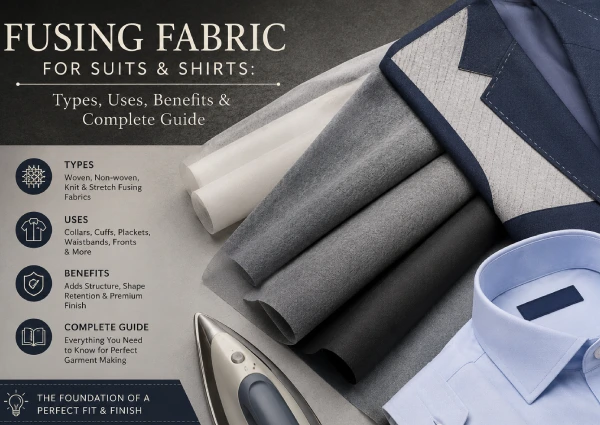
Fusing fabric—also known as fusible interlining—is a special supportive fabric used inside suits, shirts, blazers, and coats to give structure, stability, and shape.
It acts like the invisible backbone of a garment.
Whenever you see:
-
A crisp collar
-
A sharp suit lapel
-
A firm waistband
-
A structured blazer shoulder
…it is possible because of fusing fabric inside.
Fusing has a heat-activated adhesive (glue) on one side. When ironed with heat and pressure, it sticks to the main fabric and becomes one strong layer.
Why Fusing Fabric is Important
1. Gives Shape & Structure
Without fusing, coats and shirts look soft, flat, and shapeless.
With fusing, everything looks crisp, tailored, and premium.
2. Improves Durability
Collars and lapels bend the most.
Fusing keeps them strong and long-lasting.
3. Gives Premium Finish
High-end brands always use strong fusing to create a luxury look.
4. Helps Fabric Hold Its Form
Especially important for soft fabrics like:
-
Terry Rayon
-
Poly Viscose
-
Linen
-
Cotton blends
Fusing keeps them firm and neat.
Types of Fusing Fabric
Here are the major types used in tailoring:
1. Non-Woven Fusing
Best for: Shirts, lightweight collars, cuffs
-
Soft and flexible
-
Affordable
-
Quick to bond
-
Most commonly used in mass-production shirts
Texture: Paper-like but smooth
2. Woven Fusing
Best for: Premium shirts, jackets, suit lapels
-
Stronger and more natural
-
Lasts longer
-
Gives better shape
-
Used by high-end tailors
Texture: Looks like fine fabric weave
3. Knit Fusing
Best for: Stretch fabrics & modern suits
-
Adds structure without restricting movement
-
Used in stretch suits, knit blazers
-
Very comfortable
Texture: Elastic, soft mesh-like feel
4. Coat Fusing / Canvas Fusing
Best for: Suits, blazers, bandhgala, sherwani
-
Thick and highly structured
-
Maintains lapel roll
-
Ideal for wedding wear and luxury coats
Texture: Heavy, canvas-like
Common GSM Options in Fusing
Choosing the right GSM is important:
• 40–60 GSM: Shirts
Light collar & cuff fusing
• 80–100 GSM: Semi-formal suits
Good for TR, PV suiting
• 120–180 GSM: Premium coats & blazers
Perfect for wool blends, wedding wear
• 200+ GSM: Heavy canvas
High structure garments, tuxedos, bandhgalas
Where Fusing Fabric is Used
1. Collars
To keep them sharp and standing firm.
2. Cuffs
For stiffness and smooth curve.
3. Waistbands
Prevents loosening and maintains shape.
4. Lapels in Suits
Keep the lapel edges smooth, crisp, and premium.
5. Plackets (Shirt button strip)
Gives firmness for buttonholes.
6. Shoulders & Chest (Coats)
Adds body and structure to the garment.
7. Blazer Front Panels
Ensures a luxury drape.
How Fusing Fabric Works
Fusing fabric sticks using three elements:
1. Heat (Iron/Press Machine)
Activates the adhesive.
2. Pressure
Helps the glue bond strongly.
3. Time
Heat must stay long enough for proper sticking.
If any of these three are wrong → fusing will bubble or peel.
How to Identify High-Quality Fusing
✔ No chemical smell
✔ Uniform adhesive dots
✔ Smooth stick after pressing
✔ No bubbling after wearing
✔ Good weight and flexibility
✔ Soft but strong texture
Premium tailors always choose woven or knit fusing for highest quality.
Common Fusing Problems & How to Avoid Them
1. Bubbling
Cause: Low-quality fusing or improper heat
Solution: Use woven fusing & proper pressing
2. Peeling Off
Cause: Weak adhesive
Solution: Choose branded fusing (Freudenberg, Wendler)
3. Stiff Feeling
Cause: Wrong GSM
Solution: Match GSM with fabric weight
Fusing Fabric for Suit Making
For high-quality suits, use:
-
Chest canvas + lapel fusing + shoulder support
-
Woven fusing for upper body
-
Knit fusing for stretch suits
This makes the suit:
✔ Sharp
✔ Structured
✔ Premium looking
✔ Long-lasting
Why Bigreams Recommends High-Quality Fusing
At Bigreams, we focus on fabrics for:
-
Suits
-
Coats
-
Pants
-
Shirts
To make premium garments, fusing is equally important as the main fabric.
Using proper fusing ensures:
-
Better customer satisfaction
-
Premium look
-
Long life of stitched garment
-
Perfect fall and structure
This is why Bigreams always promotes quality tailoring practices.
FAQs
1. Is fusing compulsory in suits?
Yes, without fusing, suits look flat and cheap.
2. Can fusing be washed?
Yes, good-quality fusing stays even after washing.
3. Which is the best fusing for collars?
Woven fusing (60–80 GSM).
4. Why does fusing bubble sometimes?
Low-quality fusing or improper heat during bonding.
5. Is coat fusing different from shirt fusing?
Yes. Coat fusing is heavier, shirt fusing is lighter.
Guide to Footwear Fabrics: Types, Uses ?